Helfen Staatsausgaben der Wirtschaft?
Vom Multiplikator zur Nullzinsgrenze — wie eine einfache Frage zum schwierigsten Problem der Makroökonomie wurde
Das Versprechen des Multiplikators
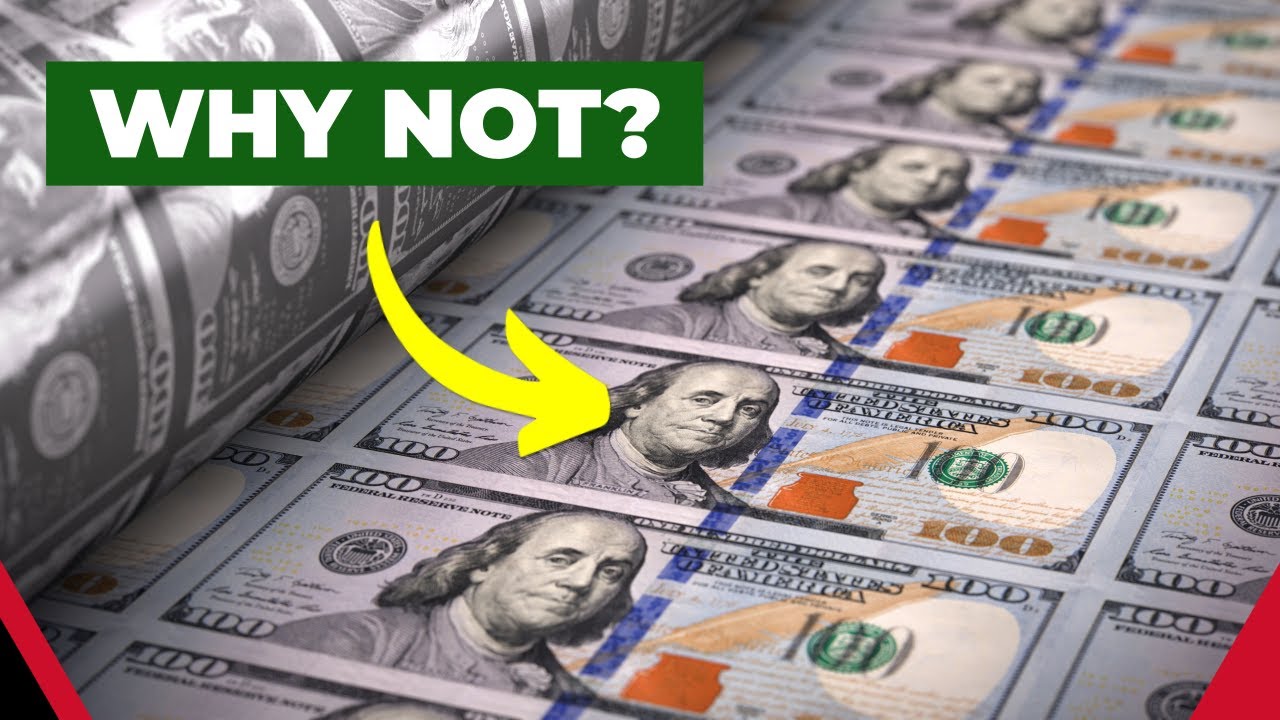
Dieses Video hat über 4 Millionen Aufrufe. Es behauptet, dem Staat könne nie das Geld ausgehen. Stimmt das?
Um diese Behauptung zu bewerten, brauchen Sie ein Konzept: den Multiplikator. Beginnen wir damit, wie Ökonomen alles messen, was die Wirtschaft produziert.
$Y$ ist das BIP. $C$ ist der Konsum, $I$ ist die Investition, $G$ sind die Staatsausgaben, $NX$ sind die Nettoexporte. Das ist eine buchhalterische Identität — per Definition wahr. Beachten Sie, dass $G$ direkt erscheint. Wenn der Staat eine Brücke baut oder einen Lehrer einstellt, ist diese Ausgabe sofort BIP, sobald die Zahlung erfolgt.
Der Gesamteffekt ist eine geometrische Reihe:
$$\Delta Y = G \cdot \big(1 + c + c^2 + c^3 + \cdots\big) = \frac{G}{1 - c}$$Wenn $MPC = 0{,}8$, beträgt der Multiplikator $1/(1-0{,}8) = 5$. Jeder Dollar erzeugt fünf Dollar an Wirtschaftsaktivität. Ein Konjunkturpaket von 100 Milliarden \$ generiert 500 Milliarden \$ BIP.
Think of it as a chain reaction. The government hires a construction crew. The crew spends its paychecks at restaurants and shops. Those owners hire more staff and order more supplies. Each round is smaller than the last, because some money leaks out into savings at every step, but the rounds add up to far more than the original dollar. That is why a multiplier of five looked, for a generation, like the closest thing economics had to free money.
Aber das eigentliche Argument geht weiter: Ein Dollar an $G$ erzeugt mehr als einen Dollar an $Y$. Das ist der Multiplikator. Der Mechanismus ist einfach: Wenn Menschen Einkommen erzielen, geben sie einen Teil davon aus — die marginale Konsumneigung (MPC). Wenn Ihre MPC 0,8 beträgt, geben Sie 80 Cent von jedem neuen Dollar aus.
Der Staat bezahlt einem Bautrupp 1 Million \$. Sie geben 800.000 \$ aus. Diese Empfänger geben 640.000 \$ aus. Dann 512.000 \$. Jede Runde ist kleiner, aber sie summieren sich.
“A country that issues its own currency can never run out of money the way you or I can. It can always afford to buy what is for sale in its own currency.”
— Stephanie Kelton, The Deficit Myth, 2020
„Warum können wir nicht einfach mehr Geld drucken?“
Ein virales Erklärvideo behauptet, Staaten mit eigener Währung könnten nie ohne Geld dastehen. Der Multiplikator, den Sie gerade gelernt haben, ist das erste Instrument, um diese Behauptung zu beurteilen — aber die Antwort erfordert das Verständnis dessen, was passiert, wenn Geldschöpfung auf reale Ressourcenbeschränkungen trifft.
Die Multiplikator-Debatte
„Das Konjunkturpaket hätte mindestens 1,2 Billionen \$ betragen sollen. Der Plan war bei weitem nicht groß genug, um eine Lücke von rund 2 Billionen \$ pro Jahr zwischen dem, was die Wirtschaft hätte produzieren können, und dem, was sie tatsächlich produzierte, zu schließen.“
— Paul Krugman, New York Times (Januar 2009)
Krugman was arguing for the \$1.2 trillion stimulus in early 2009, and his case ran straight through the Keynesian-cross arithmetic: with the economy depressed and idle resources everywhere, a spending dollar circulates without bidding anything away, so the multiplier exceeds one and output rises by more than the cost. He is operating inside the tradition that John Hicks built into the IS-LM apparatus from Keynes’s 1936 General Theory, the lineage the History of Economic Thought book traces in its chapter on the Keynesian revolution. The depressed-economy condition is doing the work, and Krugman knows it. It is the same condition Stage 3 will make precise.
„Staatsausgaben schaffen keinen Wohlstand. Jeder Dollar, den der Staat leiht, ist ein Dollar, der der privaten Investition entzogen wird. Die Idee, dass es uns reicher macht, von zukünftigen Generationen zu borgen, um Leute fürs Graben und Zuschütten von Gräben zu bezahlen, ist keynesianischer Unsinn, der vor dreißig Jahren widerlegt wurde.“
— John Cochrane, The Grumpy Economist (Januar 2009)
This is crowding out at maximum strength: if savings are fixed, public borrowing displaces private borrowing dollar for dollar and the multiplier is exactly zero. Cochrane is writing from the monetarist and rational-expectations counter-revolution that spent the 1970s and 1980s dismantling naive Keynesianism, the program the History of Economic Thought book covers in its chapter on the counter-revolution. The argument is too strong as stated: it assumes perfect crowding out, which requires savings to be completely fixed and resources fully employed, neither of which holds in a slump. But the core insight survives the exaggeration: borrowing to spend has a cost, and the multiplier is whatever is left after you subtract it.
Wo uns das hinführt
The multiplier is real, but it is smaller than the naive $1/(1-c)$ formula promises, because crowding out claws some of it back. How much it claws back depends on the state of the economy: in a slump with idle resources, crowding out is weak and the multiplier is large; at full employment, crowding out bites and the multiplier shrinks. So the number you carry into Stage 2 is not a point estimate. It is a question: under what conditions? And the first condition to interrogate is the one the multiplier quietly assumed: that consumers spend their share mechanically, round after round, without ever thinking about the bill.
Aber all das setzt voraus, dass Verbraucher mechanisch handeln: Einen Dollar erhalten, 80 Cent ausgeben, ohne nachzudenken. Was, wenn sie klüger wären? Was, wenn sie sehen, wie der Staat 100 Milliarden \$ leiht, und denken: „Irgendjemand muss dafür bezahlen — und dieser Jemand bin ich“?
Das Problem des rationalen Verbrauchers
„Die Staatsverschuldung beträgt 33 Billionen \$. Ihr Anteil ist 99.000 \$. Jedes heute geborene Kind erbt diese Last. Das ist fiskalischer Kindesmissbrauch.“
— Senator Rand Paul, Oktober 2023
Zehntausendfach geteilt. Die Darstellung unterstellt ein Modell der Staatsverschuldung, das die meisten Ökonomen ablehnen — aber sie trifft ein echtes Grundgefühl dafür, wer für Defizite bezahlt.
Die Rhetorik von Senator Paul unterstellt, dass Steuerzahler jeden Dollar der Staatsverschuldung zurückzahlen werden. 1974 fragte Robert Barro: Was, wenn die Steuerzahler das bereits wissen?
Intertemporale Entscheidung. Der Verbraucher aus Stufe 1 lebt in der Gegenwart — einen Dollar verdienen, die MPC davon ausgeben, fertig. Aber reale Menschen planen über die Zeit. Sie entscheiden nicht, wie viel sie ausgeben, indem sie nur auf das Monatsgehalt schauen. Sie denken an die Studiengebühren nächstes Jahr, ob sie in fünf Jahren noch einen Job haben, und wie die Steuern im Ruhestand aussehen könnten. Ökonomen nennen das intertemporale Optimierung: einen Ausgabenplan über das gesamte Leben wählen.
- The government cuts taxes or spends more, funding it by borrowing. Households have more money in hand today.
- But the debt must eventually be repaid through higher future taxes. The government has not created wealth; it has rescheduled when the bill arrives.
- Forward-looking households see the future tax coming. So they save the entire windfall to pay it, leaving their consumption unchanged.
- The multiplier is zero. Deficit-financed stimulus changes the timing of taxes, nothing else. This is Ricardian equivalence: debt and taxes are equivalent ways of paying for the same spending, and rational consumers are indifferent between them.
Die intertemporale Budgetbeschränkung des Verbrauchers wird durch den Zeitpunkt der Besteuerung nicht verändert. Staatsanleihen sind kein Nettovermögen — sie sind Schuldscheine, die sich die Steuerzahler im Grunde selbst ausstellen. Der Barwert der lebenslangen Steuern ist derselbe, ob der Staat sie jetzt erhebt oder leiht und später erhebt.
Imagine your employer hands you a \$5,000 “bonus” and tells you, in the same breath, that it will be docked from your salary over the next two years. You wouldn’t go on a spending spree. You’d set the money aside, because you know the clawback is coming. Ricardian equivalence says a deficit-financed tax cut is exactly that bonus: not new income, just an advance against a future deduction you can see on the horizon.
Das verändert alles. Eine temporäre Steuersenkung bringt heute Geld in Ihre Tasche, aber ein Lebenszeitoptimierer weiß, dass zukünftige Steuern steigen werden, um die Kreditaufnahme zurückzuzahlen. Ihr Lebenseinkommen hat sich nicht verändert — nur der Zeitpunkt.
Ricardianische Äquivalenz. Barros formale Version des Arguments ist klar und verheerend:
“Our national debt just crossed \$33 TRILLION. That’s over \$99,000 of debt for every single American. We are committing fiscal child abuse.”
— Sen. Rand Paul, October 2023
„War das Konjunkturpaket von 2009 zu klein?“
Christina Romer sagte Obama, es müssten 1,2 Billionen \$ sein. Der Kongress bewilligte 787 Milliarden \$. Die schleppende Erholung, die folgte, wurde zum zentralen Beweisstück in der größten fiskalpolitischen Debatte des Jahrhunderts.
Besiegen rationale Verbraucher die Fiskalpolitik?
„Sind Staatsanleihen Nettovermögen? Nein. Die Anleihen der heutigen Generation sind die Steuerlast der nächsten. Verbraucher, die das verstehen, werden mehr sparen, wenn der Staat Schulden aufnimmt, und so den fiskalischen Stimulus vollständig kompensieren.“
— Robert Barro, Journal of Political Economy (1974)
Barro’s paper is airtight given its assumptions, and that is precisely why it mattered: it became the forcing function for every fiscal-policy paper written afterward. You could no longer assume a mechanical multiplier; you had to say why Ricardian equivalence fails in your model before you could claim any effect at all. Barro is writing from the same Lucas-Sargent rational-expectations turn that produced Stage 1’s Cochrane, the recasting of macroeconomics on neoclassical micro-foundations that the History of Economic Thought book covers in its chapter on the counter-revolution. The theorem doesn’t describe reality. It disciplines every claim about reality that came after it.
„Etwa die Hälfte des Konsums entfällt auf Verbraucher, die nach Faustregeln handeln und einfach ihr laufendes Einkommen ausgeben. Die Ricardianische Äquivalenz scheitert nicht, weil die Verbraucher irrational sind, sondern weil sie beschränkt sind.“
— John Campbell & N. Gregory Mankiw, NBER Macroeconomics Annual (1989)
This is the empirical finding that rescued the fiscal multiplier from Ricardian oblivion. Campbell and Mankiw didn’t dispute Barro’s logic — they showed his key assumption fails for roughly half the economy. A household living paycheck to paycheck cannot smooth consumption against a future tax it has no way to save against; it spends what it gets, now. With half of consumption coming from such households, a targeted tax cut or transfer has a multiplier well above zero, because half the recipients behave nothing like Barro’s infinitely-patient optimizer. Ricardian equivalence is right about the savers and wrong about everyone the savers can’t see.
Wo uns das hinführt
Pure Ricardian equivalence is wrong as a description of reality — too many households are credit-constrained for the savers’ logic to govern the whole economy. But it taught the most important lesson in fiscal policy: the multiplier depends on who gets the money. A dollar to a household that can’t borrow is a dollar spent; a dollar to a wealthy saver is a dollar parked. Targeting is not a detail. It is the variable that moves the multiplier from near zero to comfortably above one. That is consumption theory speaking, not politics.
Der Multiplikator ist also nicht null, aber auch nicht so groß wie in Stufe 1 versprochen. Ist Fiskalpolitik überhaupt nützlich? Die Antwort hängt von etwas ab, das wir noch nicht berücksichtigt haben: Was die Zentralbank tut. Und es gibt eine ganz bestimmte Bedingung, unter der Fiskalpolitik das einzige Instrument wird, das funktioniert.
Die Ausnahme der Nullzinsgrenze
„Das Komitee hat heute beschlossen, einen Zielbereich für den Federal-Funds-Satz von 0 bis 1/4 Prozent festzulegen.“
— Federal Open Market Committee, 16. Dezember 2008
Neunzehn Wörter, die ankündigten, dass die mächtigste Zentralbank der Welt keine Munition mehr hatte. Lehman war drei Monate zuvor zusammengebrochen. Die Kreditmärkte waren eingefroren. Die Arbeitslosigkeit stieg rasant. Und die Fed hatte gerade ihre letzte konventionelle Kugel abgefeuert.
Geldpolitische Gegensteuerung. Um zu verstehen, warum diese neunzehn Wörter so wichtig sind, müssen Sie verstehen, was normalerweise passiert, wenn der Staat seine Ausgaben erhöht. In normalen Zeiten beobachtet die Zentralbank. Wenn Staatsausgaben die Nachfrage über die Kapazität hinaus treiben — und Inflation droht — erhöht die Zentralbank die Zinsen zur Abkühlung. Ist die Wirtschaft schwach, senkt die Zentralbank die Zinsen und macht fiskalische Stimulierung möglicherweise überflüssig.
Das ist geldpolitische Gegensteuerung: Die Zentralbank kann die Fiskalpolitik teilweise oder vollständig neutralisieren. In normalen Zeiten steuert die Fed — nicht der Kongress — die Gesamtnachfrage. Deshalb sind viele Ökonomen unter normalen Umständen skeptisch gegenüber fiskalischer Stimulierung: Selbst wenn der Multiplikator positiv ist, wird die Zentralbank ihn kompensieren, um ihr Inflationsziel zu halten.
An der Nullzinsgrenze werden zwei Kräfte, die normalerweise den Multiplikator verkleinern, gleichzeitig ausgeschaltet:
- Crowding out disappears. With slack everywhere and rates pinned at zero, public borrowing doesn’t push rates up; there is no upward pressure to resist. Private investment isn’t displaced.
- Monetary offset disappears. The Fed wants more demand; it isn’t leaning against the fiscal push, it’s cheering for it. It won’t raise rates to cancel the spending, because it’s desperate for exactly the inflation the spending might create.
Standardschätzungen setzen den fiskalischen Multiplikator an der Nullzinsgrenze bei 1,5–2,0 oder höher an (Christiano, Eichenbaum und Rebelo, 2011), verglichen mit Normalzeit-Schätzungen von 0,6–1,0.
Picture a highway. In normal times it’s near capacity, so when the government drives more cars onto it (spending), traffic slows for everyone else (crowding out), and the highway patrol (the Fed) meters the on-ramps to keep things moving. At the zero bound, the highway is nearly empty, because a recession has cleared the traffic, and the patrol has thrown the on-ramp gates wide open and is waving cars through, since an empty highway is the disaster it’s trying to end. Now every car the government adds is pure additional traffic, with nothing pushed off the road. That is why the same spending dollar buys far more output at the zero bound than it does in a boom.
Die Nullzinsfalle. Aber Zinssätze können nicht unter null fallen (oder nicht weit darunter). Wenn die Wirtschaft in einer schweren Rezession steckt und die Zinsen bereits bei null liegen, sitzt die Zentralbank fest. Sie will stimulieren, hat aber keinen Spielraum zum Senken. Das übliche Argument gegen Fiskalpolitik — „die Fed wird es kompensieren“ — verpufft. Die Fed kann nicht kompensieren, weil sie an ihrem Limit ist.
“The Committee decided today to establish a target range for the federal funds rate of 0 to 1/4 percent.”
— Federal Open Market Committee, December 16, 2008
„Hat die Fed wirklich die Kontrolle?“
Die Zentralbank soll die Wirtschaft steuern. Aber wenn die Zinsen null erreichen, wird das Lenkrad abgekoppelt. Die Krise von 2008 offenbarte eine fundamentale Grenze der Geldpolitik, die das gesamte Fachgebiet veränderte.
Verändert die Nullzinsgrenze wirklich alles?
„Wenn die Nullzinsgrenze bindet, kann der Staatsausgabenmultiplikator 1,5 oder mehr betragen, und der Wohlfahrtsmultiplikator kann sogar noch größer sein. Der Schlüsselmechanismus ist die Ausschaltung der monetären Kompensation.“
— Lawrence Christiano, Martin Eichenbaum & Charles Rebelo, Journal of Political Economy (2011)
This is the canonical result, derived inside a standard New Keynesian model — not a heterodox one. Christiano, Eichenbaum, and Rebelo showed that the multiplier isn’t a constant; it’s a function of the monetary regime, and it climbs sharply when rates are stuck at zero. Valerie Ramey’s 2019 survey of the empirical literature cross-confirms the structure: state-dependent multipliers, larger in slack-heavy, zero-bound conditions than in booms. The theoretical case and the empirical case point the same direction. Stimulus earns its keep exactly when the economy is most depressed.
„Die Nullzinsgrenze ist ein vorübergehender Zustand. Eine fiskalische Doktrin auf einen Sonderfall zu gründen ist gefährlich. Bis Konjunkturausgaben anlaufen — Infrastrukturprojekte brauchen Jahre — kann die ZLB-Episode vorbei sein, aber die Schulden bleiben.“
— Zusammenfassung der ZLB-Skeptiker-Position (Taylor, Ramey und andere)
The skeptics’ case is about timing and political economy, and it bites. The large multiplier requires the zero bound to bind for a sustained, expected stretch; if everyone thinks a rate hike is imminent, the expectations channel that drives the result evaporates. And fiscal policy is notoriously slow to legislate, appropriate, and build, so by the time the spending arrives, the special conditions may have passed, leaving ordinary crowding out to claw the multiplier back down. The counter to the counter is the historical record: the post-2008 zero bound lasted roughly seven years, far longer than “temporary,” and the 2020 response showed that fiscal deployment can be fast when the political will exists. The skeptics are right that the conditions are demanding. They’re wrong that the conditions are rare.
Wo uns das hinführt
The zero lower bound is where fiscal policy earns its keep. When the central bank is pinned at zero and committed to staying there, crowding out and monetary offset disappear together, and the spending multiplier expands to something like 1.5 to 2.0. This is a conditional endorsement, not a blank check: the result depends on the bound actually binding for a sustained, expected period, and a credible “rate hike around the corner” can dissolve it before any spending lands. For the central-bank side of this story, what the Fed was doing with its unconventional tools while fiscal policy carried the load, see the companion walkthrough on how central banks actually steer the economy; for the post-2008 monetary regime as the live policy environment, see did economics cause the 2008 crisis.
Wir haben eine bedingte Antwort aufgebaut: Fiskalpolitik funktioniert, besonders an der Nullzinsgrenze. Aber eine radikale Minderheit sagt, wir hätten die ganze Zeit die falsche Frage gestellt. Was, wenn Defizite gar nicht „finanziert“ werden müssen?
Fiskaltheorie und die offenen Fragen
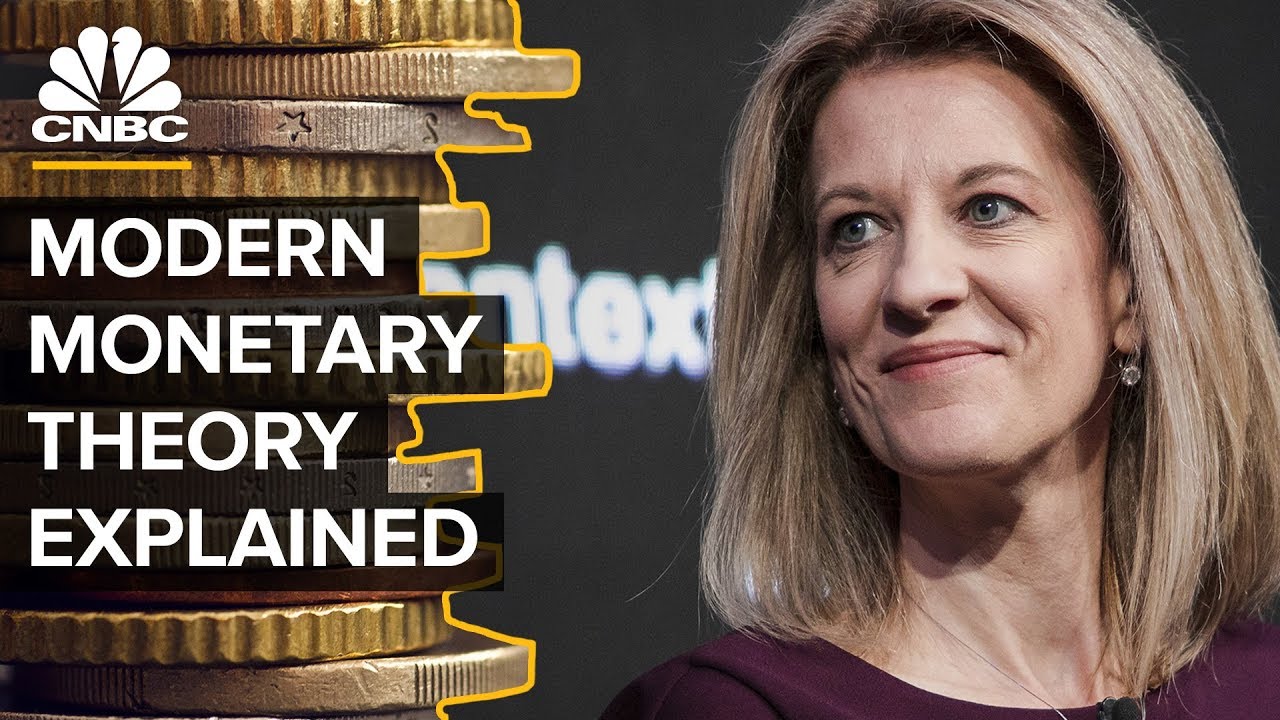
Stephanie Kelton, die prominenteste Stimme der Modernen Monetären Theorie, erklärt Stephen Colbert, dass das Defizit nicht das ist, wofür wir es halten. Das Publikum lacht — und hört dann auf zu lachen.
Moderne Monetäre Theorie (MMT). Die Kernaussage der MMT ist einfach und provokativ: Ein Staat, der seine eigene Währung ausgibt, kann nie unfreiwillig ohne Geld dastehen. Die Vereinigten Staaten drucken Dollar. Sie können immer Zahlungen in Dollar leisten. Also ist „Können wir uns das leisten?“ die falsche Frage für einen währungsausgebenden Souverän.
Die Beschränkung, so die MMT, ist Inflation, nicht das Defizit. Der Staat solle ausgeben, bis Vollbeschäftigung herrscht. Wenn die Inflation steigt, Steuern erhöhen, um Kaufkraft abzuschöpfen. Steuern „finanzieren“ keine Staatsausgaben — sie regulieren die Nachfrage. Das Defizit ist ein buchhalterischer Restposten ohne eigenständige Bedeutung.
Wenn der Staat sich zu permanenten Defiziten verpflichtet, verlangt die Mathematik, dass das Preisniveau $P_t$ steigt, um den realen Wert der bestehenden Schulden zu senken. Inflation wird nicht durch „zu viel Geld“ verursacht — sondern durch eine Fiskalpolitik, die mehr Schulden aufnimmt, als zukünftige Überschüsse tragen können.
$$\frac{B_t}{P_t} = \sum_{s=0}^{\infty} \beta^s\, E_t\big[\,\text{surplus}_{t+s}\,\big]$$If expected surpluses fall while the nominal debt $B_t$ is fixed, the price level $P_t$ must rise to keep the equation balanced. The price level is determined by fiscal expectations, not by the central bank’s money supply — which is exactly the claim that puts FTPL at odds with the standard monetary-dominance regime.
Think of government bonds like shares in a company, and the “dividends” are future budget surpluses. If investors stop believing the government will ever run surpluses to back its debt, the bonds are worth less in real terms, and since the bonds are denominated in dollars, the only way for their real value to fall is for the dollar itself to buy less. The price level is the share price of the government’s fiscal credibility. Lose the credibility, and the price level reprices, exactly as a stock would.
Die Fiskaltheorie des Preisniveaus (FTPL). John Cochrane, Eric Leeper und Christopher Sims nähern sich von der entgegengesetzten Seite. Ihr Ausgangspunkt ist eine spezifische Gleichung: Der reale Wert der Staatsschulden muss dem Barwert der zukünftigen Primärüberschüsse entsprechen.
“The federal government can’t run out of money. It can’t be forced to default. The only relevant constraint is inflation — the limit is the economy’s real productive capacity, not the size of the deficit.”
— Stephanie Kelton, The Deficit Myth, 2020
„Hat die MMT recht mit den Defiziten?“
Die Moderne Monetäre Theorie stieg in fünf Jahren vom akademischen Nischendasein zum Bestseller und zum politischen Schlagwort im US-Kongress auf. Ihre zentrale Behauptung — dass Defizite nicht so wichtig sind, wie wir denken — ist entweder die wichtigste Erkenntnis einer Generation oder die gefährlichste.
Gibt es eine fiskalische Grenze?
„Der Bund kann es sich immer leisten, mehr auszugeben. Die Frage ist nie ‚Wie bezahlen wir das?‘ Die Frage ist ‚Wird es Inflation verursachen?‘ Wenn es Spielraum in der Wirtschaft gibt — arbeitslose Arbeiter, stillstehende Fabriken — bringt Defizitfinanzierung diese Ressourcen ohne Inflation zum Einsatz.“
— Stephanie Kelton, The Deficit Myth (2020)
Kelton’s strongest empirical card is 2020: a deficit-financed response that drove unemployment down from 14.7 percent to 3.5 percent in 28 months, with no financing crisis, exactly as the MMT framework predicted. The honest accounting has to include the other half of the ledger, and Kelton’s critics press it hard: the same era produced 9.1 percent inflation by mid-2022. An MMT defender answers that the inflation was largely supply-shock driven, from energy and supply chains, and that the framework predicts inflation when capacity binds; the failure was in the political response, not the diagnosis. Whether that answer holds is the live experiment we’re inside.
„Inflation ist immer und überall ein fiskalisches Phänomen. Wenn der Staat Schulden aufnimmt, die er nicht aus zukünftigen Überschüssen zurückzahlen kann, muss das Preisniveau steigen, um den realen Wert dieser Schulden zu senken. Defizite werden bezahlt — durch Inflation.“
— John Cochrane, The Fiscal Theory of the Price Level (2023)
Cochrane’s FTPL is the sharpest theoretical rival to both MMT and the monetarist orthodoxy. He reads 2021–2022 as a near-textbook fiscal-inflation episode: a multi-trillion-dollar deficit with no credible plan for future surpluses, followed by a price-level adjustment exactly as his valuation equation predicts. It is a genuinely different mechanism from “too much money chasing too few goods.” The qualification that keeps FTPL honest: it generates distinctive, testable predictions only under a specific regime, active fiscal policy paired with passive monetary policy. When the central bank is willing and able to defend the price level by raising rates, as the Fed did in 2022, the standard monetary-dominance story reasserts itself and FTPL’s distinctive predictions fade. FTPL is right that the fiscal-monetary interaction matters more than standard models admit; it’s an open question how often its specific regime actually holds.
Wo uns das hinführt
MMT is right that currency-issuing governments face different constraints than households: resources, not solvency. FTPL is right that the fiscal-monetary interaction matters more than standard models typically admit. But neither framework replaces the core insights from Stages 1 through 3. The multiplier is real and conditional; targeting decides its size; the zero bound is where it peaks; and the inflation constraint is the binding one once capacity is reached. MMT’s prescription overestimates political responsiveness; FTPL’s distinctive predictions hold only under a specific regime. Which way the 2020s resolve the question — was the post-2020 inflation a vindication of the fiscal hawks, the MMT framework working as designed, or an FTPL repricing? — is the live experiment we’re all inside of right now. For the deeper question of what money is and how its regime changes across eras, the companion walkthrough on what money actually is is the closest neighbor.
Wo uns das hinführt
Wir begannen mit einem viralen Video, das behauptete, dem Staat könne nie das Geld ausgehen. Acht Millionen Menschen sahen es. Vier Stufen später wissen Sie Folgendes:
Four conditions decide whether a spending dollar helps:
- The credit-constrained share. A dollar to a hand-to-mouth household is spent; a dollar to a wealthy saver is parked. The roughly 50 percent hand-to-mouth share rescues the multiplier from Ricardian collapse.
- The monetary regime. In normal times the central bank offsets fiscal moves and crowding out bites, holding the multiplier near 0.6 to 1.0. At the zero bound both forces switch off and it climbs to 1.5 to 2.0.
- Targeting. Stimulus aimed at credit-constrained households has an MPC near one; broad tax cuts to savers approach the Ricardian zero. The composition of a bill can matter more than its size.
- The fiscal-monetary regime. Once real capacity binds, the inflation constraint is the one that holds, and whether MMT’s “tax it back” or FTPL’s price-level adjustment describes the response is the unresolved frontier.
So does government spending help the economy? Yes, conditionally, and the conditions are the whole answer. The mainline story from Stages 1 through 3 is the most reliable guide we have: real multipliers, larger when targeted and larger still at the zero bound, smaller when the money goes to people who save it or when the economy has no slack left to absorb it. The heterodox edges sharpen the question without overturning it. The next time someone tells you “stimulus always works” or “deficits are always reckless,” you have the tools to push past both slogans to the conditions each one ignores.