Les dépenses publiques aident-elles l'économie ?
Du multiplicateur à la borne zéro : comment une question simple est devenue le problème le plus difficile en macroéconomie
La promesse du multiplicateur
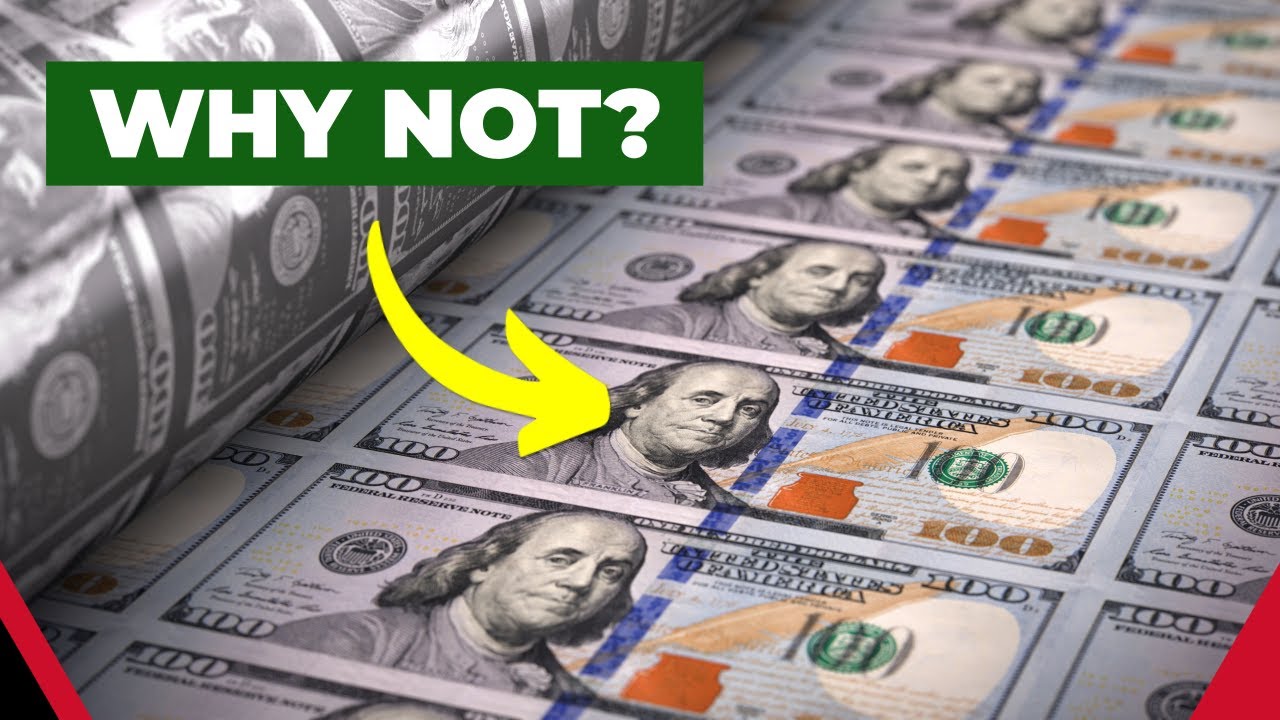
Cette vidéo a plus de 4 millions de vues. Elle affirme que le gouvernement ne peut jamais manquer d'argent. A-t-elle raison ?
Pour évaluer cette affirmation, il vous faut maîtriser un concept : le multiplicateur. Commencez par la façon dont les économistes mesurent tout ce que l'économie produit.
$Y$ est le PIB. $C$ est la consommation, $I$ l'investissement, $G$ les dépenses publiques, $NX$ les exportations nettes. C'est une identité comptable, vraie par définition. Notez que $G$ apparaît directement. Quand le gouvernement construit un pont ou embauche un enseignant, cette dépense est du PIB dès que le chèque est encaissé.
L'effet total est une série géométrique :
$$\Delta Y = G \cdot \big(1 + c + c^2 + c^3 + \cdots\big) = \frac{G}{1 - c}$$Si $MPC = 0.8$, le multiplicateur est $1/(1-0.8) = 5$. Chaque dollar crée cinq dollars d'activité. Un plan de 100 milliards \$ génère 500 milliards \$ de PIB.
Think of it as a chain reaction. The government hires a construction crew. The crew spends its paychecks at restaurants and shops. Those owners hire more staff and order more supplies. Each round is smaller than the last, because some money leaks out into savings at every step, but the rounds add up to far more than the original dollar. That is why a multiplier of five looked, for a generation, like the closest thing economics had to free money.
Mais le véritable argument va plus loin : un dollar de $G$ crée plus qu'un dollar de $Y$. C'est le multiplicateur. Le moteur est simple : quand les gens perçoivent un revenu, ils en dépensent une fraction. Les économistes appellent cette fraction la propension marginale à consommer (MPC). Si votre MPC est de 0,8, vous dépensez 80 centimes de chaque nouveau dollar.
Le gouvernement paie une équipe de chantier \$1 million. Celle-ci dépense 800 000 \$. Ces bénéficiaires dépensent 640 000 \$. Puis 512 000 \$. Chaque tour est plus petit, mais ils s'additionnent.
“A country that issues its own currency can never run out of money the way you or I can. It can always afford to buy what is for sale in its own currency.”
— Stephanie Kelton, The Deficit Myth, 2020
« Pourquoi ne peut-on pas simplement imprimer plus d'argent ? »
Une vidéo virale affirme que les gouvernements disposant de leur propre monnaie ne peuvent jamais manquer d'argent. Le multiplicateur que vous venez d'apprendre est le premier outil pour évaluer cette affirmation, mais la réponse exige de comprendre ce qui se passe quand la création monétaire rencontre les contraintes de ressources réelles.
Le débat sur le multiplicateur
« Le plan de relance aurait dû être d'au moins 1 200 milliards \$. Le plan était loin d'être assez grand pour combler un écart d'environ 2 000 milliards \$ par an entre ce que l'économie pouvait produire et ce qu'elle produisait réellement. »
— Paul Krugman, New York Times, janvier 2009
Krugman was arguing for the \$1.2 trillion stimulus in early 2009, and his case ran straight through the Keynesian-cross arithmetic: with the economy depressed and idle resources everywhere, a spending dollar circulates without bidding anything away, so the multiplier exceeds one and output rises by more than the cost. He is operating inside the tradition that John Hicks built into the IS-LM apparatus from Keynes’s 1936 General Theory, the lineage the History of Economic Thought book traces in its chapter on the Keynesian revolution. The depressed-economy condition is doing the work, and Krugman knows it. It is the same condition Stage 3 will make precise.
« Les dépenses publiques ne créent pas de richesse. Chaque dollar que le gouvernement emprunte est un dollar retiré de l'investissement privé. L'idée qu'emprunter aux générations futures pour payer des gens à creuser des fossés et les reboucher nous enrichit est un non-sens keynésien réfuté il y a trente ans. »
— John Cochrane, The Grumpy Economist, janvier 2009
This is crowding out at maximum strength: if savings are fixed, public borrowing displaces private borrowing dollar for dollar and the multiplier is exactly zero. Cochrane is writing from the monetarist and rational-expectations counter-revolution that spent the 1970s and 1980s dismantling naive Keynesianism, the program the History of Economic Thought book covers in its chapter on the counter-revolution. The argument is too strong as stated: it assumes perfect crowding out, which requires savings to be completely fixed and resources fully employed, neither of which holds in a slump. But the core insight survives the exaggeration: borrowing to spend has a cost, and the multiplier is whatever is left after you subtract it.
Où cela nous mène
The multiplier is real, but it is smaller than the naive $1/(1-c)$ formula promises, because crowding out claws some of it back. How much it claws back depends on the state of the economy: in a slump with idle resources, crowding out is weak and the multiplier is large; at full employment, crowding out bites and the multiplier shrinks. So the number you carry into Stage 2 is not a point estimate. It is a question: under what conditions? And the first condition to interrogate is the one the multiplier quietly assumed: that consumers spend their share mechanically, round after round, without ever thinking about the bill.
Mais tout cela suppose que les consommateurs sont mécaniques : recevoir un dollar, en dépenser 80 centimes, sans se poser de questions. Et s'ils étaient plus intelligents ? Et s'ils voyaient le gouvernement emprunter 100 milliards \$ et pensaient : « Quelqu'un devra payer pour ça — et ce quelqu'un, c'est moi » ?
Le problème du consommateur rationnel
« La dette nationale est de 33 000 milliards \$. Votre part est de 99 000 \$. Chaque enfant né aujourd'hui hérite de ce fardeau. C'est de la maltraitance fiscale. »
— Sénateur Rand Paul, octobre 2023
Relayé des dizaines de milliers de fois. Le cadrage suppose un modèle de dette publique que la plupart des économistes rejettent, mais il capture une intuition réelle sur qui paie les déficits.
La rhétorique du sénateur Paul suppose que les contribuables rembourseront chaque dollar de dette. En 1974, Robert Barro a posé la question : et si les contribuables le savaient déjà ?
Le choix intertemporel. Le consommateur de l'étape 1 vit dans le présent : gagner un dollar, en dépenser la fraction MPC, terminé. Mais dans la réalité, les individus se projettent dans le temps. Vous ne décidez pas combien dépenser en regardant uniquement la fiche de paie de ce mois. Vous pensez aux frais de scolarité de l'année prochaine, à la sécurité de votre emploi dans cinq ans, et à ce que les impôts pourraient être à la retraite. Les économistes appellent cela l'optimisation intertemporelle : choisir un plan de dépenses sur l'ensemble du cycle de vie.
- The government cuts taxes or spends more, funding it by borrowing. Households have more money in hand today.
- But the debt must eventually be repaid through higher future taxes. The government has not created wealth; it has rescheduled when the bill arrives.
- Forward-looking households see the future tax coming. So they save the entire windfall to pay it, leaving their consumption unchanged.
- The multiplier is zero. Deficit-financed stimulus changes the timing of taxes, nothing else. This is Ricardian equivalence: debt and taxes are equivalent ways of paying for the same spending, and rational consumers are indifferent between them.
La contrainte budgétaire intertemporelle du consommateur est inchangée par le calendrier des impôts. Les obligations d'État ne sont pas de la richesse nette ; ce sont des reconnaissances de dette que les contribuables émettent à leur propre charge. La valeur actuelle des impôts à vie est la même, que le gouvernement les collecte maintenant ou emprunte et les collecte plus tard.
Imagine your employer hands you a \$5,000 “bonus” and tells you, in the same breath, that it will be docked from your salary over the next two years. You wouldn’t go on a spending spree. You’d set the money aside, because you know the clawback is coming. Ricardian equivalence says a deficit-financed tax cut is exactly that bonus: not new income, just an advance against a future deduction you can see on the horizon.
Cela change tout. Une réduction d'impôt temporaire met de l'argent dans votre poche aujourd'hui, mais un agent qui optimise sur le long terme sait que les impôts futurs augmenteront pour rembourser l'emprunt. Votre revenu à vie n'a pas changé ; seul le calendrier l'a fait.
L'équivalence ricardienne. La formalisation de Barro est limpide et dévastatrice :
“Our national debt just crossed \$33 TRILLION. That’s over \$99,000 of debt for every single American. We are committing fiscal child abuse.”
— Sen. Rand Paul, October 2023
« La relance de 2009 était-elle trop petite ? »
Christina Romer a dit à Obama qu'il fallait 1 200 milliards \$. Le Congrès a voté 787 milliards \$. La reprise lente qui a suivi est devenue la pièce à conviction centrale du plus grand débat de politique budgétaire du siècle.
Les consommateurs rationnels défont-ils la politique budgétaire ?
« Les obligations d'État sont-elles de la richesse nette ? Non. Les obligations de la génération actuelle sont les obligations fiscales de la génération suivante. Les consommateurs qui comprennent cela épargneront davantage quand le gouvernement emprunte, compensant totalement la relance budgétaire. »
— Robert Barro, Journal of Political Economy, 1974
Barro’s paper is airtight given its assumptions, and that is precisely why it mattered: it became the forcing function for every fiscal-policy paper written afterward. You could no longer assume a mechanical multiplier; you had to say why Ricardian equivalence fails in your model before you could claim any effect at all. Barro is writing from the same Lucas-Sargent rational-expectations turn that produced Stage 1’s Cochrane, the recasting of macroeconomics on neoclassical micro-foundations that the History of Economic Thought book covers in its chapter on the counter-revolution. The theorem doesn’t describe reality. It disciplines every claim about reality that came after it.
« Environ la moitié de la consommation est le fait de consommateurs « routiniers » qui dépensent simplement leur revenu courant. L'équivalence ricardienne échoue non pas parce que les consommateurs sont irrationnels, mais parce qu'ils sont contraints. »
— John Campbell & N. Gregory Mankiw, NBER Macroeconomics Annual, 1989
This is the empirical finding that rescued the fiscal multiplier from Ricardian oblivion. Campbell and Mankiw didn’t dispute Barro’s logic — they showed his key assumption fails for roughly half the economy. A household living paycheck to paycheck cannot smooth consumption against a future tax it has no way to save against; it spends what it gets, now. With half of consumption coming from such households, a targeted tax cut or transfer has a multiplier well above zero, because half the recipients behave nothing like Barro’s infinitely-patient optimizer. Ricardian equivalence is right about the savers and wrong about everyone the savers can’t see.
Où cela nous mène
Pure Ricardian equivalence is wrong as a description of reality — too many households are credit-constrained for the savers’ logic to govern the whole economy. But it taught the most important lesson in fiscal policy: the multiplier depends on who gets the money. A dollar to a household that can’t borrow is a dollar spent; a dollar to a wealthy saver is a dollar parked. Targeting is not a detail. It is the variable that moves the multiplier from near zero to comfortably above one. That is consumption theory speaking, not politics.
Le multiplicateur n'est donc pas nul, mais il n'est pas aussi grand que l'étape 1 le promettait. La politique budgétaire est-elle même utile ? La réponse dépend de quelque chose que nous n'avons pas encore considéré : ce que fait la banque centrale. Et il existe une condition spécifique où la politique budgétaire devient le seul outil qui fonctionne.
L'exception de la borne zéro
« Le Comité a décidé aujourd'hui d'établir une fourchette cible pour le taux des fonds fédéraux de 0 à 1/4 de pour cent. »
— Federal Open Market Committee, 16 décembre 2008
Quatorze mots pour annoncer que la banque centrale la plus puissante de la planète avait épuisé ses munitions. Lehman s'était effondrée trois mois plus tôt. Les marchés du crédit étaient gelés. Le chômage explosait. Et la Fed venait de tirer sa dernière cartouche conventionnelle.
La compensation monétaire. Pour comprendre pourquoi ces quatorze mots comptent autant, il faut comprendre ce qui se passe normalement quand le gouvernement augmente ses dépenses. En temps ordinaire, la banque centrale observe. Si les dépenses publiques poussent la demande au-delà des capacités et menacent l'inflation, la banque centrale relève les taux d'intérêt pour refroidir l'économie. Si l'économie est faible, la banque centrale baisse les taux, rendant potentiellement la relance budgétaire superflue.
C'est la compensation monétaire : la banque centrale peut partiellement ou totalement neutraliser la politique budgétaire. En temps normal, c'est la Fed (et non le Congrès) qui contrôle la demande agrégée. C'est pourquoi beaucoup d'économistes sont sceptiques quant à la relance budgétaire en conditions ordinaires : même si le multiplicateur est positif, la banque centrale en compensera l'effet pour maintenir sa cible d'inflation.
À la borne zéro, deux forces qui réduisent normalement le multiplicateur sont simultanément désactivées :
- Crowding out disappears. With slack everywhere and rates pinned at zero, public borrowing doesn’t push rates up; there is no upward pressure to resist. Private investment isn’t displaced.
- Monetary offset disappears. The Fed wants more demand; it isn’t leaning against the fiscal push, it’s cheering for it. It won’t raise rates to cancel the spending, because it’s desperate for exactly the inflation the spending might create.
Les estimations standards situent le multiplicateur budgétaire à la borne zéro à 1,5–2,0 ou plus (Christiano, Eichenbaum et Rebelo, 2011), contre des estimations en temps normal de 0,6–1,0.
Picture a highway. In normal times it’s near capacity, so when the government drives more cars onto it (spending), traffic slows for everyone else (crowding out), and the highway patrol (the Fed) meters the on-ramps to keep things moving. At the zero bound, the highway is nearly empty, because a recession has cleared the traffic, and the patrol has thrown the on-ramp gates wide open and is waving cars through, since an empty highway is the disaster it’s trying to end. Now every car the government adds is pure additional traffic, with nothing pushed off the road. That is why the same spending dollar buys far more output at the zero bound than it does in a boom.
Le piège de la borne zéro. Mais les taux d'intérêt ne peuvent pas descendre sous zéro (ou pas beaucoup). Quand l'économie est en récession sévère et que les taux sont déjà à zéro, la banque centrale est coincée. Elle veut stimuler mais n'a plus de marge pour baisser. L'argument habituel contre la politique budgétaire (« la Fed compensera ») s'évapore. La Fed ne peut pas compenser parce qu'elle est à sa limite.
“The Committee decided today to establish a target range for the federal funds rate of 0 to 1/4 percent.”
— Federal Open Market Committee, December 16, 2008
« La Fed est-elle vraiment aux commandes ? »
La banque centrale est censée piloter l'économie. Mais quand les taux atteignent zéro, le volant se déconnecte. La crise de 2008 a révélé une limite fondamentale de la politique monétaire qui a remodelé tout le domaine.
La borne zéro change-t-elle vraiment tout ?
« Quand la borne zéro contraint, le multiplicateur des dépenses publiques peut être de 1,5 ou plus, et le multiplicateur de bien-être peut être encore plus grand. Le mécanisme clé est l'élimination de la compensation monétaire. »
— Lawrence Christiano, Martin Eichenbaum & Charles Rebelo, Journal of Political Economy, 2011
This is the canonical result, derived inside a standard New Keynesian model — not a heterodox one. Christiano, Eichenbaum, and Rebelo showed that the multiplier isn’t a constant; it’s a function of the monetary regime, and it climbs sharply when rates are stuck at zero. Valerie Ramey’s 2019 survey of the empirical literature cross-confirms the structure: state-dependent multipliers, larger in slack-heavy, zero-bound conditions than in booms. The theoretical case and the empirical case point the same direction. Stimulus earns its keep exactly when the economy is most depressed.
« La borne zéro est une condition temporaire. Construire une doctrine budgétaire autour d'un cas particulier est dangereux. Le temps que les dépenses de relance montent en puissance — les projets d'infrastructure prennent des années — l'épisode de la borne zéro peut être terminé, mais la dette reste. »
— Résumé de la position sceptique sur la borne zéro (Taylor, Ramey et autres)
The skeptics’ case is about timing and political economy, and it bites. The large multiplier requires the zero bound to bind for a sustained, expected stretch; if everyone thinks a rate hike is imminent, the expectations channel that drives the result evaporates. And fiscal policy is notoriously slow to legislate, appropriate, and build, so by the time the spending arrives, the special conditions may have passed, leaving ordinary crowding out to claw the multiplier back down. The counter to the counter is the historical record: the post-2008 zero bound lasted roughly seven years, far longer than “temporary,” and the 2020 response showed that fiscal deployment can be fast when the political will exists. The skeptics are right that the conditions are demanding. They’re wrong that the conditions are rare.
Où cela nous mène
The zero lower bound is where fiscal policy earns its keep. When the central bank is pinned at zero and committed to staying there, crowding out and monetary offset disappear together, and the spending multiplier expands to something like 1.5 to 2.0. This is a conditional endorsement, not a blank check: the result depends on the bound actually binding for a sustained, expected period, and a credible “rate hike around the corner” can dissolve it before any spending lands. For the central-bank side of this story, what the Fed was doing with its unconventional tools while fiscal policy carried the load, see the companion walkthrough on how central banks actually steer the economy; for the post-2008 monetary regime as the live policy environment, see did economics cause the 2008 crisis.
Nous avons construit une réponse conditionnelle : la politique budgétaire fonctionne, surtout à la borne zéro. Mais une minorité radicale dit que nous posons la mauvaise question depuis le début. Et si les déficits n'avaient pas besoin d'être « financés » du tout ?
Théorie fiscale et questions ouvertes
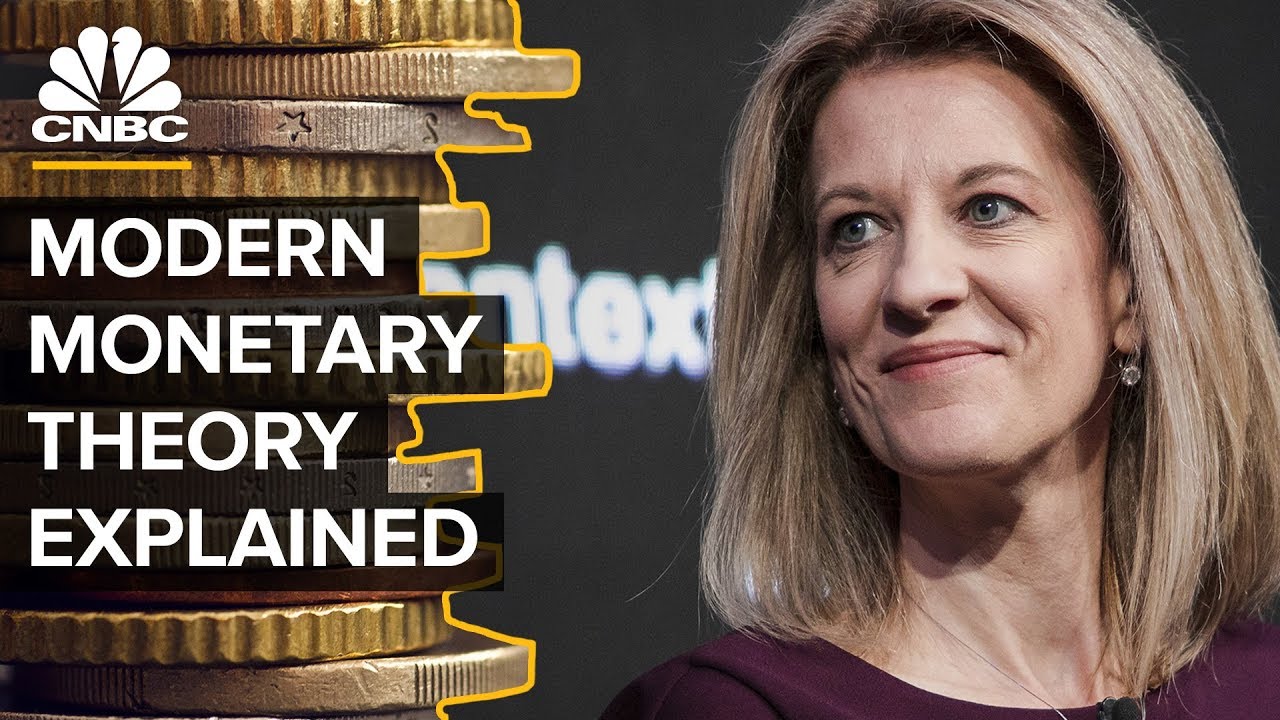
Stephanie Kelton, la voix la plus éminente de la Théorie Monétaire Moderne, dit à Stephen Colbert que le déficit n'est pas ce que nous croyons. Le public rit, puis cesse de rire.
La Théorie Monétaire Moderne (TMM). L'affirmation centrale de la TMM est simple et provocatrice : un gouvernement qui émet sa propre monnaie ne peut jamais involontairement manquer d'argent. Les États-Unis impriment des dollars. Ils peuvent toujours effectuer des paiements en dollars. Donc « pouvons-nous nous le permettre ? » est la mauvaise question pour un souverain émetteur de monnaie.
La contrainte, dit la TMM, est l'inflation, pas le déficit. Dépensez jusqu'au plein emploi. Si l'inflation augmente, augmentez les impôts pour drainer le pouvoir d'achat. Les impôts ne « financent » pas les dépenses publiques ; ils régulent la demande. Le déficit est un résidu comptable sans signification indépendante.
Si le gouvernement s'engage dans des déficits permanents, les mathématiques exigent que le niveau des prix $P_t$ augmente pour réduire la valeur réelle de la dette existante. L'inflation n'est pas causée par « trop de monnaie » ; elle est causée par une politique budgétaire qui émet plus de dette que les futurs excédents ne peuvent soutenir.
$$\frac{B_t}{P_t} = \sum_{s=0}^{\infty} \beta^s\, E_t\big[\,\text{surplus}_{t+s}\,\big]$$If expected surpluses fall while the nominal debt $B_t$ is fixed, the price level $P_t$ must rise to keep the equation balanced. The price level is determined by fiscal expectations, not by the central bank’s money supply — which is exactly the claim that puts FTPL at odds with the standard monetary-dominance regime.
Think of government bonds like shares in a company, and the “dividends” are future budget surpluses. If investors stop believing the government will ever run surpluses to back its debt, the bonds are worth less in real terms, and since the bonds are denominated in dollars, the only way for their real value to fall is for the dollar itself to buy less. The price level is the share price of the government’s fiscal credibility. Lose the credibility, and the price level reprices, exactly as a stock would.
La Théorie Fiscale du Niveau des Prix (TFNP). John Cochrane, Eric Leeper et Christopher Sims abordent la question sous un angle opposé. Leur point de départ est une équation spécifique : la valeur réelle de la dette publique doit être égale à la valeur actuelle des futurs excédents primaires.
“The federal government can’t run out of money. It can’t be forced to default. The only relevant constraint is inflation — the limit is the economy’s real productive capacity, not the size of the deficit.”
— Stephanie Kelton, The Deficit Myth, 2020
« La TMM a-t-elle raison sur les déficits ? »
La Théorie Monétaire Moderne est passée de niche universitaire à best-seller puis à argument de tribune politique en cinq ans. Son affirmation centrale, que les déficits n'ont pas l'importance qu'on leur prête, est soit la plus importante avancée d'une génération, soit la plus dangereuse.
Existe-t-il une limite budgétaire ?
« Le gouvernement fédéral peut toujours se permettre de dépenser plus. La question n'est jamais « comment allons-nous payer ? » La question est « cela causera-t-il de l'inflation ? » S'il y a des capacités inutilisées dans l'économie — des travailleurs au chômage, des usines inactives — les dépenses déficitaires mobilisent ces ressources sans inflation. »
— Stephanie Kelton, The Deficit Myth, 2020
Kelton’s strongest empirical card is 2020: a deficit-financed response that drove unemployment down from 14.7 percent to 3.5 percent in 28 months, with no financing crisis, exactly as the MMT framework predicted. The honest accounting has to include the other half of the ledger, and Kelton’s critics press it hard: the same era produced 9.1 percent inflation by mid-2022. An MMT defender answers that the inflation was largely supply-shock driven, from energy and supply chains, and that the framework predicts inflation when capacity binds; the failure was in the political response, not the diagnosis. Whether that answer holds is the live experiment we’re inside.
« L'inflation est toujours et partout un phénomène budgétaire. Quand le gouvernement émet de la dette qu'il ne peut rembourser par des excédents futurs, le niveau des prix doit augmenter pour réduire la valeur réelle de cette dette. Les déficits sont payés — par l'inflation. »
— John Cochrane, The Fiscal Theory of the Price Level, 2023
Cochrane’s FTPL is the sharpest theoretical rival to both MMT and the monetarist orthodoxy. He reads 2021–2022 as a near-textbook fiscal-inflation episode: a multi-trillion-dollar deficit with no credible plan for future surpluses, followed by a price-level adjustment exactly as his valuation equation predicts. It is a genuinely different mechanism from “too much money chasing too few goods.” The qualification that keeps FTPL honest: it generates distinctive, testable predictions only under a specific regime, active fiscal policy paired with passive monetary policy. When the central bank is willing and able to defend the price level by raising rates, as the Fed did in 2022, the standard monetary-dominance story reasserts itself and FTPL’s distinctive predictions fade. FTPL is right that the fiscal-monetary interaction matters more than standard models admit; it’s an open question how often its specific regime actually holds.
Où cela nous mène
MMT is right that currency-issuing governments face different constraints than households: resources, not solvency. FTPL is right that the fiscal-monetary interaction matters more than standard models typically admit. But neither framework replaces the core insights from Stages 1 through 3. The multiplier is real and conditional; targeting decides its size; the zero bound is where it peaks; and the inflation constraint is the binding one once capacity is reached. MMT’s prescription overestimates political responsiveness; FTPL’s distinctive predictions hold only under a specific regime. Which way the 2020s resolve the question — was the post-2020 inflation a vindication of the fiscal hawks, the MMT framework working as designed, or an FTPL repricing? — is the live experiment we’re all inside of right now. For the deeper question of what money is and how its regime changes across eras, the companion walkthrough on what money actually is is the closest neighbor.
Où cela nous mène
Nous avons commencé avec une vidéo virale affirmant que le gouvernement ne peut jamais manquer d'argent. Huit millions de personnes l'ont regardée. Quatre étapes plus tard, voici ce que vous savez maintenant :
Four conditions decide whether a spending dollar helps:
- The credit-constrained share. A dollar to a hand-to-mouth household is spent; a dollar to a wealthy saver is parked. The roughly 50 percent hand-to-mouth share rescues the multiplier from Ricardian collapse.
- The monetary regime. In normal times the central bank offsets fiscal moves and crowding out bites, holding the multiplier near 0.6 to 1.0. At the zero bound both forces switch off and it climbs to 1.5 to 2.0.
- Targeting. Stimulus aimed at credit-constrained households has an MPC near one; broad tax cuts to savers approach the Ricardian zero. The composition of a bill can matter more than its size.
- The fiscal-monetary regime. Once real capacity binds, the inflation constraint is the one that holds, and whether MMT’s “tax it back” or FTPL’s price-level adjustment describes the response is the unresolved frontier.
So does government spending help the economy? Yes, conditionally, and the conditions are the whole answer. The mainline story from Stages 1 through 3 is the most reliable guide we have: real multipliers, larger when targeted and larger still at the zero bound, smaller when the money goes to people who save it or when the economy has no slack left to absorb it. The heterodox edges sharpen the question without overturning it. The next time someone tells you “stimulus always works” or “deficits are always reckless,” you have the tools to push past both slogans to the conditions each one ignores.