政府支出有助于经济吗?
从乘数效应到零利率下限——一个简单的问题如何成为宏观经济学中最难的问题
乘数效应的承诺
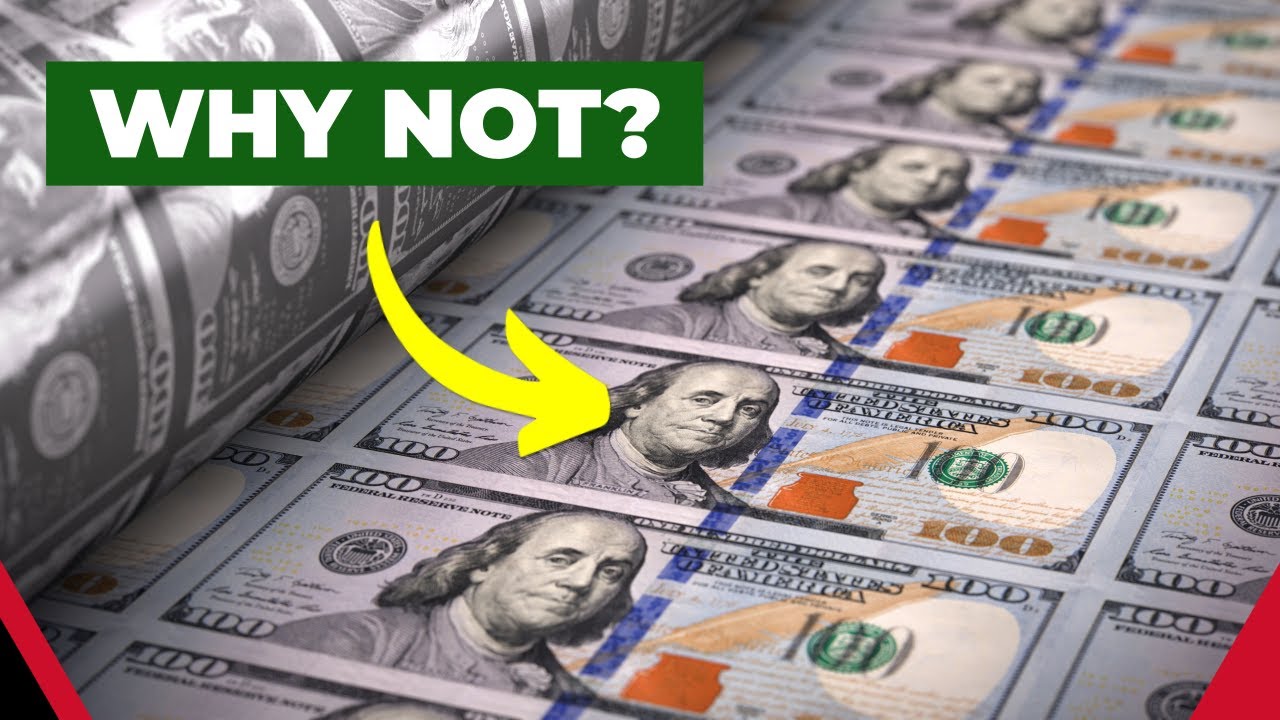
这段视频播放量超过400万。视频里说政府永远不会花光钱。对吗?
要评估这一说法,你需要一个概念:乘数效应。先来看经济学家如何衡量一个经济体的总产出。
$Y$ 是GDP。$C$ 是消费,$I$ 是投资,$G$ 是政府支出,$NX$ 是净出口。这是一个会计恒等式——按定义为真。注意 $G$ 直接出现在其中。当政府修建一座桥梁或雇用一名教师时,这笔支出在支票兑现的那一刻就是GDP。
总效应是一个几何级数:
$$\Delta Y = G \cdot \big(1 + c + c^2 + c^3 + \cdots\big) = \frac{G}{1 - c}$$如果 $MPC = 0.8$,乘数为 $1/(1-0.8) = 5$。每一美元创造五美元的经济活动。一项1000亿美元的支出法案就能拉动5000亿美元的GDP。
Think of it as a chain reaction. The government hires a construction crew. The crew spends its paychecks at restaurants and shops. Those owners hire more staff and order more supplies. Each round is smaller than the last, because some money leaks out into savings at every step, but the rounds add up to far more than the original dollar. That is why a multiplier of five looked, for a generation, like the closest thing economics had to free money.
但更关键的论点是:一美元的 $G$ 能创造超过一美元的 $Y$。这就是乘数效应。背后的道理很简单:人们拿到收入后,会花掉其中一部分——即边际消费倾向(MPC)。如果你的MPC是0.8,你每获得一美元就会花掉80美分。
政府支付给建筑工人100万美元。他们花掉80万美元。这些钱的接收者又花掉64万美元。然后是51.2万美元。每一轮都在减少,但总数在不断叠加。
“A country that issues its own currency can never run out of money the way you or I can. It can always afford to buy what is for sale in its own currency.”
— Stephanie Kelton, The Deficit Myth, 2020
"为什么我们不能直接印更多的钱?"
一个走红的科普视频说,拥有自己货币的政府永远不会花光钱。你刚学到的乘数效应是评估这一说法的第一个工具——但答案需要理解当货币创造遇到实际资源约束时会发生什么。
乘数效应之辩
"刺激计划至少应该是1.2万亿美元。该计划远远不够大,无法填补经济实际产出与潜在产出之间约2万亿美元的年度缺口。"
— 保罗·克鲁格曼,《纽约时报》,2009年1月
Krugman was arguing for the \$1.2 trillion stimulus in early 2009, and his case ran straight through the Keynesian-cross arithmetic: with the economy depressed and idle resources everywhere, a spending dollar circulates without bidding anything away, so the multiplier exceeds one and output rises by more than the cost. He is operating inside the tradition that John Hicks built into the IS-LM apparatus from Keynes’s 1936 General Theory, the lineage the History of Economic Thought book traces in its chapter on the Keynesian revolution. The depressed-economy condition is doing the work, and Krugman knows it. It is the same condition Stage 3 will make precise.
"政府支出不创造财富。政府借的每一美元都是从私人投资中拿走的一美元。认为向后代借款来付钱让人挖沟再填上能让我们更富有——这是凯恩斯主义的胡说八道,三十年前就已被证伪。"
— 约翰·科克伦,《脾气暴躁的经济学家》,2009年1月
This is crowding out at maximum strength: if savings are fixed, public borrowing displaces private borrowing dollar for dollar and the multiplier is exactly zero. Cochrane is writing from the monetarist and rational-expectations counter-revolution that spent the 1970s and 1980s dismantling naive Keynesianism, the program the History of Economic Thought book covers in its chapter on the counter-revolution. The argument is too strong as stated: it assumes perfect crowding out, which requires savings to be completely fixed and resources fully employed, neither of which holds in a slump. But the core insight survives the exaggeration: borrowing to spend has a cost, and the multiplier is whatever is left after you subtract it.
目前的结论
The multiplier is real, but it is smaller than the naive $1/(1-c)$ formula promises, because crowding out claws some of it back. How much it claws back depends on the state of the economy: in a slump with idle resources, crowding out is weak and the multiplier is large; at full employment, crowding out bites and the multiplier shrinks. So the number you carry into Stage 2 is not a point estimate. It is a question: under what conditions? And the first condition to interrogate is the one the multiplier quietly assumed: that consumers spend their share mechanically, round after round, without ever thinking about the bill.
但所有这些都假设消费者是机械的:拿到一美元,花80美分,不问任何问题。如果他们更聪明呢?如果他们看到政府借了1000亿美元后想:"总得有人为此买单——那个人就是我"呢?
理性消费者问题
"国债为33万亿美元。你的份额是99,000美元。今天出生的每个孩子都继承了这个负担。这是财政上的虐童。"
— 参议员兰德·保罗,2023年10月
被转发数万次。这种框架预设了一种政府债务模型——多数经济学家并不认同——但它确实说中了一种真实的直觉:赤字最终由谁来买单?。
保罗参议员的修辞假设纳税人将会偿还每一美元的债务。1974年,罗伯特·巴罗提出了一个问题:如果纳税人已经知道这一点呢?
跨期选择。阶段1的消费者活在当下——赚一美元,按MPC的比例花掉,完事。但真实的人会跨时间规划。你不会只看这个月的工资来决定花多少。你会考虑明年的学费、五年后是否还有工作,以及退休时的税率。经济学家称之为跨期优化:为一生的消费做出最优规划。
- The government cuts taxes or spends more, funding it by borrowing. Households have more money in hand today.
- But the debt must eventually be repaid through higher future taxes. The government has not created wealth; it has rescheduled when the bill arrives.
- Forward-looking households see the future tax coming. So they save the entire windfall to pay it, leaving their consumption unchanged.
- The multiplier is zero. Deficit-financed stimulus changes the timing of taxes, nothing else. This is Ricardian equivalence: debt and taxes are equivalent ways of paying for the same spending, and rational consumers are indifferent between them.
消费者的跨期预算约束不会因税收时间的改变而改变。政府债券不是净财富——它们是纳税人写给自己的欠条。终身税收的现值是相同的,无论政府是现在征收还是先借款后来再征收。
Imagine your employer hands you a \$5,000 “bonus” and tells you, in the same breath, that it will be docked from your salary over the next two years. You wouldn’t go on a spending spree. You’d set the money aside, because you know the clawback is coming. Ricardian equivalence says a deficit-financed tax cut is exactly that bonus: not new income, just an advance against a future deduction you can see on the horizon.
这改变了一切。临时减税今天把钱放进你的口袋,但一个终身优化者知道未来的税收将上升以偿还借款。你一辈子的总收入没有变——变的只是收税的时间。
李嘉图等价。巴罗对这一论点的正式版本简洁而致命:
“Our national debt just crossed \$33 TRILLION. That’s over \$99,000 of debt for every single American. We are committing fiscal child abuse.”
— Sen. Rand Paul, October 2023
"2009年刺激方案是否太小了?"
克里斯蒂娜·罗默告诉奥巴马需要1.2万亿美元。国会通过了7870亿美元。随后的缓慢复苏成为本世纪最大的财政政策辩论中的核心证据。
理性消费者能打败财政政策吗?
"政府债券是净财富吗?不是。当代人的债券就是下一代人的税收负担。理解这一点的消费者在政府借款时会增加储蓄,完全抵消财政刺激。"
— 罗伯特·巴罗,《政治经济学杂志》,1974年
Barro’s paper is airtight given its assumptions, and that is precisely why it mattered: it became the forcing function for every fiscal-policy paper written afterward. You could no longer assume a mechanical multiplier; you had to say why Ricardian equivalence fails in your model before you could claim any effect at all. Barro is writing from the same Lucas-Sargent rational-expectations turn that produced Stage 1’s Cochrane, the recasting of macroeconomics on neoclassical micro-foundations that the History of Economic Thought book covers in its chapter on the counter-revolution. The theorem doesn’t describe reality. It disciplines every claim about reality that came after it.
"大约一半的消费由'经验法则'消费者解释,他们只是花掉当期收入。李嘉图等价失败不是因为消费者不理性,而是因为他们受到约束。"
— 约翰·坎贝尔 & N·格里高利·曼昆,《NBER宏观经济学年鉴》,1989年
This is the empirical finding that rescued the fiscal multiplier from Ricardian oblivion. Campbell and Mankiw didn’t dispute Barro’s logic — they showed his key assumption fails for roughly half the economy. A household living paycheck to paycheck cannot smooth consumption against a future tax it has no way to save against; it spends what it gets, now. With half of consumption coming from such households, a targeted tax cut or transfer has a multiplier well above zero, because half the recipients behave nothing like Barro’s infinitely-patient optimizer. Ricardian equivalence is right about the savers and wrong about everyone the savers can’t see.
目前的结论
Pure Ricardian equivalence is wrong as a description of reality — too many households are credit-constrained for the savers’ logic to govern the whole economy. But it taught the most important lesson in fiscal policy: the multiplier depends on who gets the money. A dollar to a household that can’t borrow is a dollar spent; a dollar to a wealthy saver is a dollar parked. Targeting is not a detail. It is the variable that moves the multiplier from near zero to comfortably above one. That is consumption theory speaking, not politics.
所以乘数效应不为零,但也没有阶段1承诺的那么大。财政政策甚至有用吗?答案取决于我们尚未考虑的因素:央行在做什么。而有一种特定条件下,财政政策成为唯一有效的工具。
零利率下限例外
"委员会今天决定将联邦基金利率目标区间设定为0至1/4个百分点。"
— 联邦公开市场委员会,2008年12月16日
短短一句话宣布了地球上最强大的央行已经耗尽了弹药。雷曼兄弟三个月前已经倒闭。信贷市场冻结。失业率飙升。美联储刚刚打出了最后一颗常规子弹。
货币政策对冲。要理解为什么这句话如此重要,你需要理解当政府增加支出时通常会发生什么。在正常时期,央行在关注着。如果政府支出将需求推到产能以上——威胁到通胀——央行会提高利率来给经济降温。如果经济疲软,央行会降息,财政刺激也就可能变得多余了。
这就是货币政策对冲:央行可以部分或完全抵消财政政策。在正常时期,是美联储——而非国会——控制着总需求。所以许多经济学家对正常条件下的财政刺激持怀疑态度:即使乘数为正,央行也会为维持其通胀目标而抵消它。
在零利率下限处,通常压低乘数的两股力量同时失效:
- Crowding out disappears. With slack everywhere and rates pinned at zero, public borrowing doesn’t push rates up; there is no upward pressure to resist. Private investment isn’t displaced.
- Monetary offset disappears. The Fed wants more demand; it isn’t leaning against the fiscal push, it’s cheering for it. It won’t raise rates to cancel the spending, because it’s desperate for exactly the inflation the spending might create.
标准估计将零利率下限时的财政乘数定为1.5–2.0甚至更高(克里斯蒂亚诺、艾肯鲍姆和雷贝洛,2011),相比正常时期估计的0.6–1.0。
Picture a highway. In normal times it’s near capacity, so when the government drives more cars onto it (spending), traffic slows for everyone else (crowding out), and the highway patrol (the Fed) meters the on-ramps to keep things moving. At the zero bound, the highway is nearly empty, because a recession has cleared the traffic, and the patrol has thrown the on-ramp gates wide open and is waving cars through, since an empty highway is the disaster it’s trying to end. Now every car the government adds is pure additional traffic, with nothing pushed off the road. That is why the same spending dollar buys far more output at the zero bound than it does in a boom.
零利率下限陷阱。但利率不能低于零(或不能低太多)。当经济处于严重衰退且利率已经为零时,央行被困住了。它想刺激经济但没有降息空间。反对财政政策的通常论点——"美联储会抵消它"——蒸发了。美联储无法抵消,因为它已经到了极限。
“The Committee decided today to establish a target range for the federal funds rate of 0 to 1/4 percent.”
— Federal Open Market Committee, December 16, 2008
"美联储真的在掌控吗?"
央行理应驾驭经济。但当利率降至零时,方向盘断开了。2008年危机揭示了货币政策的一个根本局限,它重塑了整个领域。
零利率下限真的改变了一切吗?
"当零下限约束生效时,政府支出乘数可达1.5或以上,而福利乘数可能更大。关键机制是消除了货币政策的对冲。"
— 劳伦斯·克里斯蒂亚诺、马丁·艾肯鲍姆 & 查尔斯·雷贝洛,《政治经济学杂志》,2011年
This is the canonical result, derived inside a standard New Keynesian model — not a heterodox one. Christiano, Eichenbaum, and Rebelo showed that the multiplier isn’t a constant; it’s a function of the monetary regime, and it climbs sharply when rates are stuck at zero. Valerie Ramey’s 2019 survey of the empirical literature cross-confirms the structure: state-dependent multipliers, larger in slack-heavy, zero-bound conditions than in booms. The theoretical case and the empirical case point the same direction. Stimulus earns its keep exactly when the economy is most depressed.
"零利率下限是暂时的状况。围绕一个特殊情况构建财政教条是危险的。等到刺激支出开始增加时——基础设施项目需要数年——零利率下限期可能已经结束了,但债务仍然存在。"
— 零利率下限怀疑论者立场总结(泰勒、拉米等人)
The skeptics’ case is about timing and political economy, and it bites. The large multiplier requires the zero bound to bind for a sustained, expected stretch; if everyone thinks a rate hike is imminent, the expectations channel that drives the result evaporates. And fiscal policy is notoriously slow to legislate, appropriate, and build, so by the time the spending arrives, the special conditions may have passed, leaving ordinary crowding out to claw the multiplier back down. The counter to the counter is the historical record: the post-2008 zero bound lasted roughly seven years, far longer than “temporary,” and the 2020 response showed that fiscal deployment can be fast when the political will exists. The skeptics are right that the conditions are demanding. They’re wrong that the conditions are rare.
目前的结论
The zero lower bound is where fiscal policy earns its keep. When the central bank is pinned at zero and committed to staying there, crowding out and monetary offset disappear together, and the spending multiplier expands to something like 1.5 to 2.0. This is a conditional endorsement, not a blank check: the result depends on the bound actually binding for a sustained, expected period, and a credible “rate hike around the corner” can dissolve it before any spending lands. For the central-bank side of this story, what the Fed was doing with its unconventional tools while fiscal policy carried the load, see the companion walkthrough on how central banks actually steer the economy; for the post-2008 monetary regime as the live policy environment, see did economics cause the 2008 crisis.
我们已经构建了一个有条件的答案:财政政策有效,尤其是在零利率下限处。但一个激进的少数派说我们一直在问错误的问题。如果赤字根本不需要"买单"呢?
财政理论与未解之问
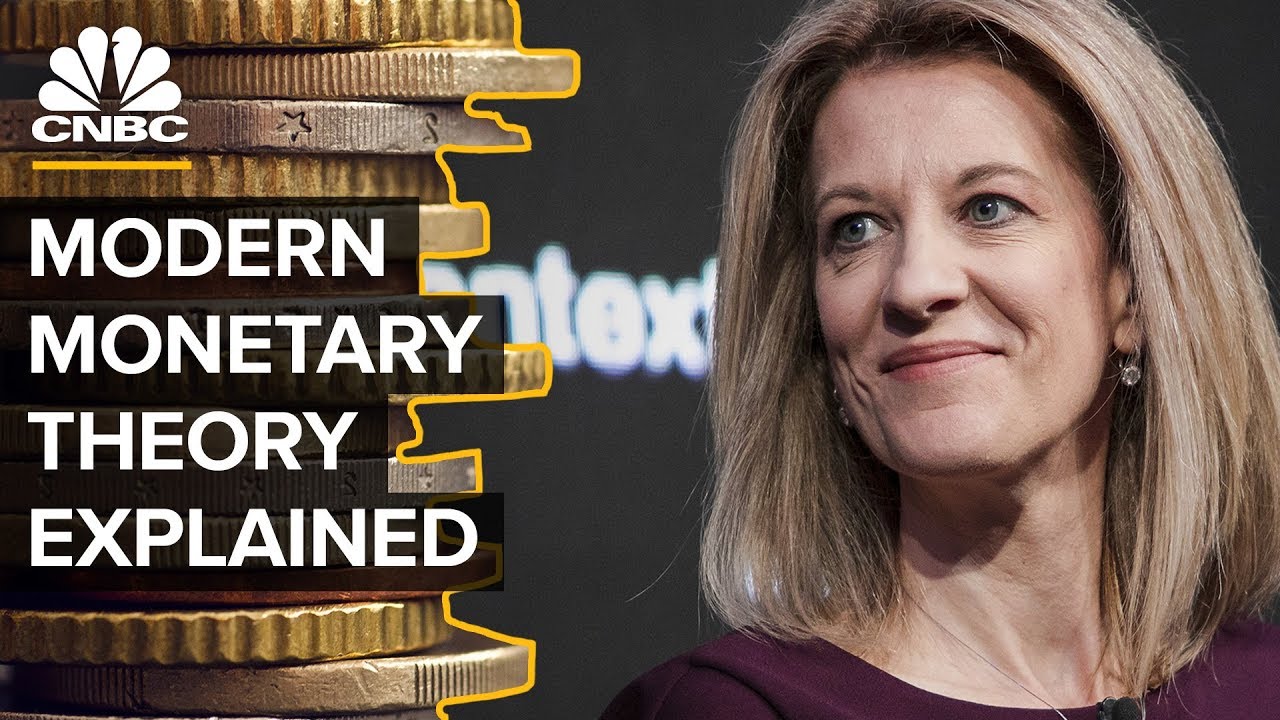
斯蒂芬妮·凯尔顿,现代货币理论最知名的代言人,告诉斯蒂芬·科尔伯特赤字不是我们所想的那样。观众笑了——然后不笑了。
现代货币理论(MMT)。MMT的核心主张简单而有挑衅性:发行自己货币的政府永远不可能非自愿地花光钱。美国印刷美元。它总能以美元支付。所以对货币发行国而言,"我们负担得起吗?"是一个错误的问题。
MMT说,约束是通胀,而非赤字。支出到充分就业为止。如果通胀上升,就加税以抽走购买力。税收不是"为"政府支出提供资金——它们调节需求。赤字是只是账面上的余数,本身没有独立的经济意义。
如果政府承诺永久赤字,数学要求价格水平 $P_t$ 上升以降低现有债务的实际价值。通胀不是由"过多的货币"引起的——而是由发行超过未来盈余所能支撑的债务的财政政策引起的。
$$\frac{B_t}{P_t} = \sum_{s=0}^{\infty} \beta^s\, E_t\big[\,\text{surplus}_{t+s}\,\big]$$If expected surpluses fall while the nominal debt $B_t$ is fixed, the price level $P_t$ must rise to keep the equation balanced. The price level is determined by fiscal expectations, not by the central bank’s money supply — which is exactly the claim that puts FTPL at odds with the standard monetary-dominance regime.
Think of government bonds like shares in a company, and the “dividends” are future budget surpluses. If investors stop believing the government will ever run surpluses to back its debt, the bonds are worth less in real terms, and since the bonds are denominated in dollars, the only way for their real value to fall is for the dollar itself to buy less. The price level is the share price of the government’s fiscal credibility. Lose the credibility, and the price level reprices, exactly as a stock would.
价格水平的财政理论(FTPL)。约翰·科克伦、埃里克·利珀和克里斯托弗·西姆斯从相反的方向切入。出发点是一个具体的等式:政府债务的实际价值必须等于未来基本盈余的现值。
“The federal government can’t run out of money. It can’t be forced to default. The only relevant constraint is inflation — the limit is the economy’s real productive capacity, not the size of the deficit.”
— Stephanie Kelton, The Deficit Myth, 2020
"MMT关于赤字的看法是对的吗?"
现代货币理论在五年内从学术角落变成畅销书再到国会的谈话要点。它的核心主张——赤字不像我们所想的那样重要——要么是一代人中最重要的洞见,要么是最危险的。
是否存在财政极限?
"联邦政府总是能负担得起更多支出。问题永远不是'我们如何为此买单?'而是'它会引起通胀吗?'如果经济存在闲置——失业工人、闲置工厂——赤字支出让这些资源投入使用而不会引起通胀。"
— 斯蒂芬妮·凯尔顿,《赤字神话》,2020年
Kelton’s strongest empirical card is 2020: a deficit-financed response that drove unemployment down from 14.7 percent to 3.5 percent in 28 months, with no financing crisis, exactly as the MMT framework predicted. The honest accounting has to include the other half of the ledger, and Kelton’s critics press it hard: the same era produced 9.1 percent inflation by mid-2022. An MMT defender answers that the inflation was largely supply-shock driven, from energy and supply chains, and that the framework predicts inflation when capacity binds; the failure was in the political response, not the diagnosis. Whether that answer holds is the live experiment we’re inside.
"通胀始终且到处都是一种财政现象。当政府发行无法从未来盈余中偿还的债务时,价格水平必须上升以降低该债务的实际价值。赤字是要付出代价的——通过通胀。"
— 约翰·科克伦,《价格水平的财政理论》,2023年
Cochrane’s FTPL is the sharpest theoretical rival to both MMT and the monetarist orthodoxy. He reads 2021–2022 as a near-textbook fiscal-inflation episode: a multi-trillion-dollar deficit with no credible plan for future surpluses, followed by a price-level adjustment exactly as his valuation equation predicts. It is a genuinely different mechanism from “too much money chasing too few goods.” The qualification that keeps FTPL honest: it generates distinctive, testable predictions only under a specific regime, active fiscal policy paired with passive monetary policy. When the central bank is willing and able to defend the price level by raising rates, as the Fed did in 2022, the standard monetary-dominance story reasserts itself and FTPL’s distinctive predictions fade. FTPL is right that the fiscal-monetary interaction matters more than standard models admit; it’s an open question how often its specific regime actually holds.
目前的结论
MMT is right that currency-issuing governments face different constraints than households: resources, not solvency. FTPL is right that the fiscal-monetary interaction matters more than standard models typically admit. But neither framework replaces the core insights from Stages 1 through 3. The multiplier is real and conditional; targeting decides its size; the zero bound is where it peaks; and the inflation constraint is the binding one once capacity is reached. MMT’s prescription overestimates political responsiveness; FTPL’s distinctive predictions hold only under a specific regime. Which way the 2020s resolve the question — was the post-2020 inflation a vindication of the fiscal hawks, the MMT framework working as designed, or an FTPL repricing? — is the live experiment we’re all inside of right now. For the deeper question of what money is and how its regime changes across eras, the companion walkthrough on what money actually is is the closest neighbor.
目前的结论
我们从一段声称政府永远不会花光钱的走红视频开始。800万人观看了它。四个阶段之后,以下是你的收获:
Four conditions decide whether a spending dollar helps:
- The credit-constrained share. A dollar to a hand-to-mouth household is spent; a dollar to a wealthy saver is parked. The roughly 50 percent hand-to-mouth share rescues the multiplier from Ricardian collapse.
- The monetary regime. In normal times the central bank offsets fiscal moves and crowding out bites, holding the multiplier near 0.6 to 1.0. At the zero bound both forces switch off and it climbs to 1.5 to 2.0.
- Targeting. Stimulus aimed at credit-constrained households has an MPC near one; broad tax cuts to savers approach the Ricardian zero. The composition of a bill can matter more than its size.
- The fiscal-monetary regime. Once real capacity binds, the inflation constraint is the one that holds, and whether MMT’s “tax it back” or FTPL’s price-level adjustment describes the response is the unresolved frontier.
So does government spending help the economy? Yes, conditionally, and the conditions are the whole answer. The mainline story from Stages 1 through 3 is the most reliable guide we have: real multipliers, larger when targeted and larger still at the zero bound, smaller when the money goes to people who save it or when the economy has no slack left to absorb it. The heterodox edges sharpen the question without overturning it. The next time someone tells you “stimulus always works” or “deficits are always reckless,” you have the tools to push past both slogans to the conditions each one ignores.